
22nd International Conference on Multibody Systems, Nonlinear Dynamics, and Control (MSNDC)
as part of ASME IDETC-CIE
VENUE: HILTON AMERICAS-HOUSTON, HOUSTON, Tx, USA
DATES: August 23-26, 2026
ORGANIZERS:
James R. Chagdes, Miami University
Andrea Zanoni, Politecnico di Milano
Francesco Danzi, California Merced
Xinxin Yu, Tampere University
Overview
The International Conference on Multibody Systems, Nonlinear Dynamics, and Control (MSNDC) is held annually at the ASME IDETC-CIE Conference. It is a premier meeting event for professional networking and research exchange across the multibody systems and nonlinear dynamics technical community. The conference facilitates the dissemination of fundamental research in the enabling disciplines as well as research into their application to engineered or naturally occurring mechanical systems across all length and time scales.
HIGHLIGHTS
Special issue of JCND Selected papers will be considered for journal publication
Student Paper Competition with cash awards
Best Paper Competition All full-length papers will be considered
Keynote Lectures
JCND BEST PAPER AWARD LECTURE
TBA
Monday, August 23, 2:10 PM to 3:50 PM Room 340B
D’ALEMBERT AWARD LECTURE – JORGE AMBRÓSIO
Multibody Dynamics: A Short Historical Overview Looking for the Future
Monday, August 23, 10:50 AM to 12:10 PM Room 340B
ABSTRACT:
As a branch computational dynamics, within the broader area of computational mechanics, multibody dynamics is now an independent mature scientific area fundamental to the design and analysis of complex engineered systems. With its theoretic foundations in the classic Newtonian mechanics its basis has been developed by mechanists and mathematicians before the computer age. Computational Multibody Dynamics methods start developing independently with the access to computers, being recognized, today, as an autonomous part of computational mechanics with its particular methods, dedicated computer codes, conferences, scientific journals and international associations, being taught in a large number of university courses worldwide with dedicated textbooks. Originally more focused in aerospace systems and gyroscopes, multibody dynamics found new fields of applications in biomechanics, initially in crashworthiness and later on general movement, machine design and vehicle dynamics. The breath of applications was further developed in its classical fields with important developments on flexible multibody dynamics for aerospace, machines and surface vehicle applications, biomechanics for biomedical engineering, sports sciences and veterinary studies or mechatronics and general control. Bridging the present and the future, the coupling between the classical Multibody Formulations and other fields of computational mechanics, via co-simulation paradigms, is being found to be an important discipline for multiphysics computational environments. The possibilities offered by the opportunities created by the Artificial Intelligence arise with challenges and dangers, which can only be overcome with solid foundations and Natural Intelligence. The need for Digital Twins in all major engineering applications is another area that is reshaping the use of computational procedures in Multibody Dynamics.

SHORT BIO:
Prof. Jorge A.C. Ambrósio, having received his Ph.D. degree from the University of Arizona in 1991, he is currently Full Professor and head of the Structural and Computational Mechanics group at the Mechanical Engineering Department of Instituto Superior Técnico at the University of Lisbon, Portugal. He is the author of more than 300 publications, including several books and a large number of papers in international journals in the areas of Multibody Dynamics, Flexible Multibody Dynamics, Structural Mechanics, Vehicle Dynamics, Crashworthiness and Biomechanics. His current SCOPUS h-index is over 50 with more than 8000 citations. He was the advisor of more than 30 PhD students and a large number of MSc students, being the responsible for the creation of diverse courses in Mechanical Systems, Vehicle Dynamics and Biomechanics in which the computational core is Multibody Dynamics. He has been the responsible of several national and international projects in railway dynamics, biomechanics and passive safety. Currently he is the Editor-in-Chief of Multibody System Dynamics, for which is is the co-founder, and member of the editorial boards of several international journals.
MULTIBODY SYSTEMS KEYNOTE – OLIVIER BRÜLS
Nonsmooth formulations for flexible multibody systems: From frictional contact laws to numerical simulation
Tuesday, August 24, 8:10 AM to 9:10 AM Room 340B
ABSTRACT:
This talk addresses the numerical simulation of multibody systems composed of rigid and flexible bodies interacting through frictional contact. Particular attention is devoted to interactions involving slender structural components such as flexible beams and cables. Such configurations arise in many applications, including textile engineering, soft robotics, cable assemblies, and cable-driven mechanical systems.
The Signorini–Coulomb model describes unilateral contact by combining the Signorini condition for non-penetration with Coulomb’s law of dry friction. It provides a simple and physically meaningful idealization of dry contact with a minimal set of parameters, making it particularly suitable for system-level simulation.
The treatment of nonsmooth contact laws in systems involving flexible beams raises several fundamental questions: What is the interplay between beam kinematic assumptions and the contact law? How should the contact interface along a flexible component be spatially discretized? How can the framework be extended to dynamics, and what role does the impact law play in that context? Finally, how can the equations of motion be integrated in time in the presence of nonsmooth phenomena and strong flexibility effects? The talk will discuss modeling and numerical strategies that enable nonsmooth contact formulations to be effectively combined with flexible multibody dynamics in practical simulation frameworks.
SHORT BIO:
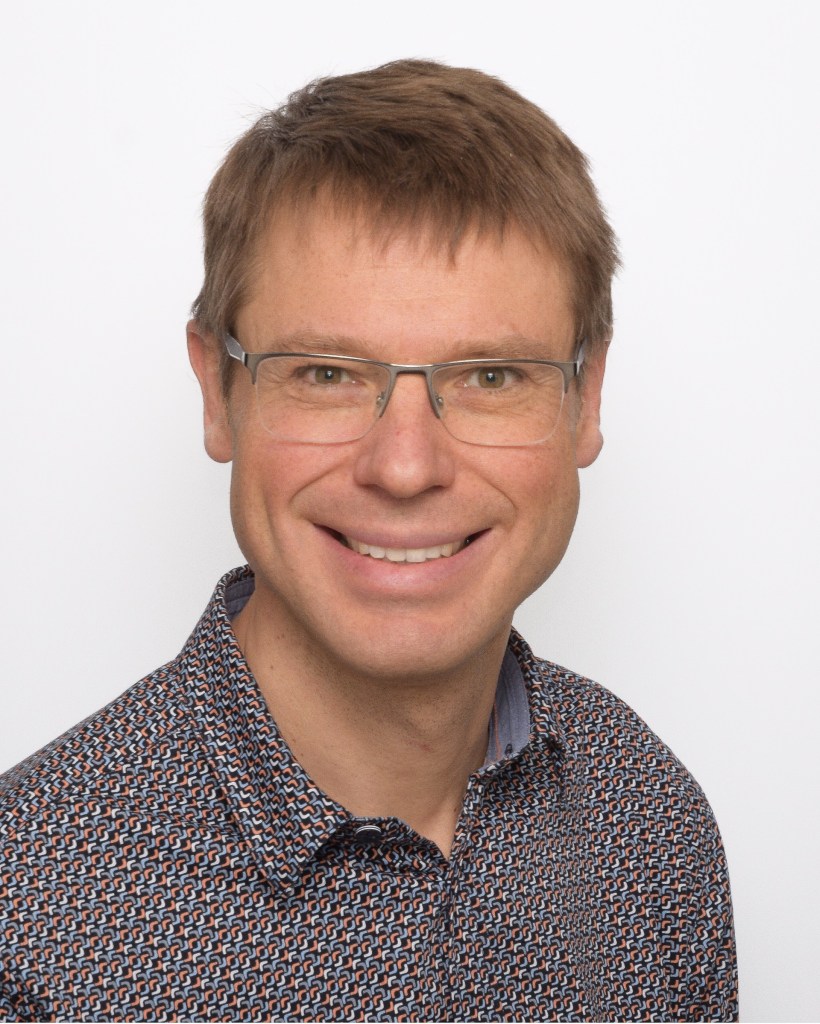
Olivier Brüls is Full Professor in the Department of Aerospace and Mechanical Engineering at the University of Liège in Belgium. He obtained a Master’s degree in Mechanical Engineering in 2001 and earned his Ph.D. degree from the University of Liège in 2005. He spent a postdoctoral year within the Institute of Engineering and Computational Mechanics at the University of Stuttgart, Germany. Since 2008, he is the head of the Multibody and Mechatronic Systems Lab at the University of Liège. His research focuses on flexible multibody dynamics, mechatronics, numerical simulation, control and optimization methods with applications in the fields of robotics, biomechanics and deployable structures. He is also involved in the Laboratory of Human Motion Analysis of the University of Liège. He serves as associate editor of “Mechanism and Machine Theory”, is member of the advisory board of “Multibody System Dynamics”, and is part of the steering committee of the overlay journal “Journal of Theoretical, Computational and Applied Mechanics (JTCAM)”. He is one of the coordinators of the European Network for Nonmooth Dynamics (ENNSD).
NONLINEAR DYNAMICS KEYNOTE – ANIL BAJAJ
Random/Chaotic Excursions in Nonlinear Mechanics: Jets, Resonant Structures, ‘Car Seats’ and Microresonators
Monday, August 23, 9:10 AM to 10:30 AM Room 340A
ABSTRACT:
The faculty career of Anil Bajaj can be delineated into two distinct components: research, teaching and scholarly activities, and service to Purdue academic programs, primarily in Mechanical Engineering. Beginning with some historical context of his early research effort, the talk will focus on some of the research that has been conducted by Anil Bajaj and his collaborators, including graduate students and faculty over the past forty or so years. A few of the research areas will receive greater attention. The first project involves ‘bifurcation phenomena’ arising in self-excited oscillations of fluid-conveying pipes. The second research area involves ‘resonant dynamics’ of nonlinear elastic structures including spherical pendulum, strings, beams, and plates with various boundary conditions. While, in the past, structures were selected for analysis based on their characteristics, some more recent studies on synthesis of such structures will also be described. Lastly, detailed multi-degree-of-freedom modeling effort investigating the dynamics of seat-occupant systems to characterize low frequency vibrations affecting the occupant’s ride will be presented.
SHORT BIO:
Anil K. Bajaj is the Alpha P. Jamison Professor of Mechanical Engineering at Purdue University. He served as a Visiting Professor and Arcot Ramachandran Chair in Department of Applied Mechanics at the Indian Institute of Technology Madras and Chennai, India, in 2019-2020. He was the William E. and Florence E. Perry Head of Mechanical Engineering (6/2011-6/2019) and Associate Head for Research and Graduate Education (1998-2010), all at Purdue. Dr. Bajaj completed his B.Tech. (1973) and M.Tech. (1976), both in Mechanical Engineering from the Indian Institute of Technology, Kharagpur and Kanpur, India, respectively, and PhD in Mechanics (1981) from the University of Minnesota. Dr. Bajaj’s research is in the areas of nonlinear dynamics of structural systems; linear stability and dynamics of systems and structures; brake squeal predication and sensitivity analysis; dynamics of seat-occupant systems; MEMS designs using nonlinear resonances; flow-induced dynamics of elastic bodies; Uncertainty Analysis in Dynamical Systems; and modeling of Viscoelastic Properties of Foam. He is a Fellow of the ASME, and has received many Purdue University awards (“Provost’s Award for Outstanding Graduate Mentors”, Purdue Graduate School, 2006; College of Engineering “Mentorship” Award for Faculty Excellence, “Team” Award for Faculty Excellence, 2009). He has published more than 250 archival journal and conference proceedings papers, and has advised (or co-advised) more than 52 M.S. and Ph.D. students. Dr. Bajaj served as a Contributing Editor of the journal Nonlinear Dynamics till 2015. He was awarded the 2019 Thomas K. Caughey Dynamics Award by the Applied Mechanics Division (AMD) of the ASME.
Call for Papers
Paper submission
Full-paper submission
- Recommended Length: 10 pages
- Best Paper Award: All papers are automatically considered for this award.
- Submission Template: Latex
Presentation-only submission
- Submission Process: Please submit an extended abstract (maximum 2 pages) describing the content of your planned presentation. You may use the same template as for full paper submissions. Note that the deadline for extended abstracts is later than that for full papers.
- Review Process: The extended abstract will be reviewed for relevance to the conference.
- Publication Information: The abstract will be used only in the review stage, and will not be published in the proceedings. Thus, the work will also not be copyrighted by ASME.
Student Paper Competition Information
Finalists of the Student Paper Competition will be awarded cash prizes
Submission Guidelines
- Please submit your paper as a regular “technical paper publication” on the conference submission site (select MSNDC). The conference organizers will identify the papers eligible for the student paper competition.
- Please submit to the symposium that best matches the technical content of the paper.
There will be no direct submissions to student paper competition.
During the submission of your work, check the box:

- ELIGIBILITY: The lead author and presenter must be a student
- The 10-page maximum limit will be strictly enforced to ensure fairness. Competitive papers longer than 10-pages may be asked to resubmit a 10-page version prior to final evaluation.
The anticipated evaluation criteria are listed below to aid the authors. Both the paper and presentation will be evaluated.
Manuscript Evaluation
- Originality:
- Distinguishing the paper from the authors’ previous work
- Distinguishing the paper from the research in that area
- Technical content and quality:
- Literature review
- Method description
- Results and analysis of the results
- Novelty of the method
- Relevance and contribution:
- Relevance of the paper to the symposium topic
- Contribution of the paper to the symposium topic
- Organization and clarity:
- Fluency of the paper
- Definition of the mathematical terms and concepts used in the paper
- Quality of the figures
- Relevance of the figure captions with the content of the figures
- References to the figure in the text
- Necessary information about the paper and contribution in the abstract and conclusion
Presentation Evaluation
- Introduction:
- The research question/hypothesis was clearly stated.
- The goals and specific objectives were presented.
- The project had sufficient, supporting background.
- Methods and results:
- The methods were clearly outlines/explained.
- The presented acknowledged limitations of the study.
- The results were clearly explained/highlighted.
- Conclusions:
- A review/summary of the project was presented.
- The significance of the results was discussed.
- The applicability of the results was discussed.
- Presentation style:
- Presentation was clear, readable, well-structured, and logical.
- The presentation fit into the allotted time. 8
- The student seemed knowledgeable, exhibited good voice projection and confidence, and responded well to questions from the audience.
Deadlines
- Submission of Full-Length Draft Paper: March 16, 2026 March 23, 2026
- and Abstracts for Presentation Only Submissions: April 20, 2026
- Paper Reviews Completed: April 20, 2026
- Author Notification of Decision: April 27, 2026
- Submission of Copyright Form: May 18, 2026
- Final Paper Submission: May 19, 2026
- Registration Date: May 19, 2026
TOPICS
MSNDC-01 Nonlinear Dynamics and Control of Smart Structures and Systems
(Cross-Listed with VIB-01 and MNS-01)
Andrea Arena, Sapienza University of Rome, andrea.arena@uniroma1.it
Francesco Danzi, University of California Merced, fdanzi@ucmerced.edu
The Symposium is focused on Nonlinear Dynamics and Control of Smart Structures and Systems across different scales, from the nano- to the meso-scale, including nanocomposites and metamaterials-based structures, MEMS and NEMS, and the macro-scale, including complex mechanical systems. The relevant systems involve innovative applications in the field of mechanical engineering. The symposium gathers researchers from industry, academia, and government agencies working in the most innovative areas of nonlinear dynamics and vibration to discuss recent developments in experimental, analytical, and numerical techniques as applied to the synthesis, characterization, and control of Smart Materials and Structures, and Complex Systems. Papers are welcome in the area of analytical modeling and numerical simulations of linear and nonlinear dynamic phenomena, numerical and analytical studies on the dynamic stability of systems, wave propagation and absorption, vibration control and experimental characterization of nonlinear dynamic behaviors. The symposium also intends to encourage interactions between theoretical and applied researchers working in the most innovative areas of nonlinear dynamics. The symposium will also be a great opportunity for disseminating recent developments of experimental, analytical and numerical techniques, and for discussing novel phenomena and behaviors characterizing smart materials and structures. The symposium “Nonlinear Dynamics and Control of Smart Structures and Systems” will cover, but will not be limited to, the following topics:
- Characterization of the vibration and dynamic response of smart structures and systems;
- Reduced-order modeling of smart structures and systems;
- Nonlinear dynamics of continuous and discontinuous mechanical systems;
- Nonlinear dynamic phenomena and interactions in mechanical systems and structures;
- Dynamic stability of nonlinear systems due to multiphysics interaction;
- Experimental studies of observed linear and nonlinear dynamic phenomena;
- Wave propagation and absorption in smart structures and systems;
- Bifurcations and chaos in dynamic systems;
- Asymptotic methods in nonlinear dynamics;
- Non-smooth systems;
- Novel vibration control devices;
- Hybrid techniques that blend active and passive vibration control;
- Dynamics and vibrations of MEMS and NEMS;
- Dynamics and control of multi-body micro- and nano-systems;
- Dynamics and control of coupled thermal, electrostatic, magnetic, elastic MEMS/NEMS;
- Collective behaviors, such as localization and synchronization in MEMS/ NEMS;
- Innovative concepts of sensing and actuating based on nonlinear MEMS/ NEMS;
MSNDC-02 Nonlinear Dynamics of Systems and Nonlinear Phenomena
(Cross-Listed with VIB-02)
Dumitru Caruntu, University of Texas Rio Grande Valley, dimitru.caruntu@utrgv.edu
Ashu Sharma, Auburn University, asharma@auburn.edu, asharma@auburn.edu
Real-world problems seldom adhere to linear or nearly linear behaviors. Decades of work has led to the explorations of a galaxy of nonlinear dynamics phenomena, unveiling terrains for exciting applications across the spectrum of science and engineering. Today, we stand witness to the flourishing of significant and exciting new advances in nonlinear dynamics far beyond the known limitations. This forthcoming joint symposium is designed to serve as a forum for exchanging insights and discussions on recent breakthroughs in theoretical, computational, experimental, and applied aspects of modeling, analyzing, and controlling nonlinear systems. Papers in the following areas are particularly encouraged:
- Nonlinear Resonances, Phenomena, and Interactions;
- Dynamic Systems with Time-Variability, Delay, or Discontinuities;
- Reduced-Order Modelling;
- Fractional Dynamics;
- Structural Dynamics;
- Flexible Slender Structures;
- Nonlinear Energy Transfers and Harvesting;
- Vibration and Stability of Systems;
- Computational Methods;
- Optimization and Control;
- Sensitivity Analysis and Design;
- Nonlinear Dynamics and Fracture of Composite Structures;
- Nonlinear Metamaterials and Metastructures;
- Soft Systems and Structures;
- Nonlinear Noisy Systems.
MSNDC-03 Contact Dynamics of Mechanical Structures
(Cross-Listed with VIB-03)
João Paulo Flores Fernandes, University of Minho, pflores@dem.uminho.pt
This symposium is focused on the study of mechanical joints, contact, friction, and damping. The aim is to promote discussion, enhance understanding, and generate new insights into the connections between tribological-level friction, contact mechanics, and the dynamic responses of built-up assemblies with mechanical contact at a structural level. This symposium invites papers addressing all aspects of the dynamics and mechanics of contact and friction, with particular emphasis on the following challenges: reduced order modeling, advanced analytical/numerical methods, nonlinear analysis, nonlinear normal modes, data-driven methods, and reverse modeling and system identification. Other key areas of interest include hysteresis in jointed structures, the repeatability and variability of response, physical theories and studies of friction, measurements and predictions of energy dissipation and damping, methods to account for uncertainty and nonlinearity in structures with contact and friction, and the development and validation of predictive models of contact.
MSNDC-04 Data-Driven and Machine Learning Techniques in Vibrations and Dynamics
(Cross-Listed with VIB-04)
Amin Ghadami, University of Southern California, ghadami@usc.edu
Vipin Kumar Agarwal, University of Memphis, vipin.a@memphis.edu
This symposium aims to bring together researchers advancing the use of data-driven and machine learning techniques in the fields of vibrations and dynamics. These approaches have shown significant promise in advancing the fields of vibrations and dynamics, offering innovative techniques to model, understand, and control complex systems and structures. This symposium will highlight cutting-edge research, methodologies, and applications that leverage state-of-the-art data-driven methods and machine learning techniques within the domain of vibrations and dynamics. Topics to be covered include, but are not limited to, the following applications of data-driven and machine learning techniques in vibrations and dynamics:
- Time series analysis and prediction;
- Dynamic modeling and vibration analysis of nonlinear systems and structures;
- Discovery of governing equations;
- Reduced-order modeling in vibrations and dynamics;
- Feature extraction for vibrations and dynamics;
- Integration of physics-based models with data-driven methods for improved understanding;
- Control of vibrations and dynamics;
- Predictive maintenance and condition monitoring of mechanical systems.
MSNDC-05 Industry Applications of Vibration, Shock, Acoustics and Dynamics
(Cross-Listed with VIB-05)
Ata Donmez, Ohio State University, donmez.4@osu.edu
Isaac Hong, Ohio State University, hong.250@osu.edu
The symposium on Industrial Applications of Vibration, Shock, Acoustics, and Dynamics provides a forum for sharing ideas, activities, best practices, and innovative solutions to applied problems faced by industry, national laboratories, academia, and related partners. Applications ranging from the automotive industry to national defense increasingly require innovative analysis, simulation and testing to solve complex problems involving vibration, acoustics, and dynamics phenomena. Abstracts are invited that cover standard and nonstandard, multi-disciplinary, and systems-level techniques in vibration, acoustics, dynamics, and related areas of application.
MSNDC-06 Dynamics of Biological, Bio-Inspired and Biomimetic Systems
James R. Chagdes, Miami University, james.chagdes@miamioh.edu
Hewenxuan Li, Rochester Institute of Technology, heleme@rit.edu
Sachin Goyal, University of California (Merced), sgoyal2@ucmerced.edu
This symposium brings together a diverse set of researchers who are at the forefront of the emerging field of studying the dynamic aspects of Biological, Bio-inspired and Biomimetic Systems. Researchers conducting traditional or non-traditional academic research, or those driven by industrial applications present their experimental, analytical, and computational studies with Biological, Bio-Inspired and Biomimetic Systems at their focus.
MSNDC-07 Computational Methods and Software Tools in Multibody Systems and Nonlinear Dynamics
Francisco González, University of A Coruña, f.gonzalez@udc.es
Grzegorz Orzechowski, LUT University, grzegorz.orzechowski@lut.fi
Andrea Zanoni, Politecnico di Milano, andrea.zanoni@polimi.it
The symposium focuses on recent advances in theoretical, computational, and applied aspects related to the synthesis, simulation, analysis, control, and optimization of multibody systems and nonlinear dynamics. The scope of the symposium encompasses theoretical developments and novel algorithms, implementation techniques, experimentation and validation, and practical applications. Submissions are welcome on the following and related topics: efficient algorithms and computational strategies (including real-time simulation, Human/Hardware-in-the-Loop and System-in-the-Loop applications, reduced-order models and surrogate models); co-simulation problems (such as fluid/structure interaction and cyber-physical systems); sensitivity analysis and optimization strategies; uncertainty quantification, simulation and optimization under uncertainty; design of experiments and verification methods; and optimal design and control.
MSNDC-08 Motion Planning, Dynamics, and Control of Robots
(Cross-Listed with MR-05)
Andreas Müller, Johannes Kepler University Linz, a.mueller@jku.at
Papers are solicited in the areas of motion planning, dynamics, and control of robots and mechanisms. Theoretical, experimental, and computational aspects are all invited. Topics of interest include, but are not limited to:
- Legged and mobile robots;
- Serial and parallel robots;
- Cable robot and tensegrity mechanism;
- Dynamic analysis, modeling, and simulation;
- Control methods and controller design;
- Trajectory optimization and optimal control;
- Applications of machine learning and AI;
- Manipulation and locomotion;
- Stability and efficiency;
- Mission planning, path planning, and motion planning for robots and autonomous systems.
MSNDC-09 Advances in Vehicle Dynamics and Control
(Cross-Listed with AVT-01)
Hiroyuki Sugiyama, University of Iowa, hiroyuki-sugiyama@uiowa.edu
Paramsothy Jayakumar, US Army GVSC, paramsothy.jayakumar.civ@army.mil
Xinxin Yu, Tampere University, xinxin.yu@tuni.fi
This symposium highlights recent developments in multibody modeling of vehicle dynamics, including control, stability and multi-physics domain computation. Submissions are welcome in the fields of tire/terrain and wheel/rail interactions, vehicle control, including autonomous mobility, intelligent transportation systems, ride comfort, vehicle subsystem modeling, next-generation simulation tools, validation and verification. The symposium aims to provide a platform to discuss the latest research developments, while also welcoming presentations on cutting-edge industrial applications in vehicle modeling for advanced design, the development of digital twins, and advanced control systems.
MSNDC-10 Flexible Multibody Dynamics
Andreas Zwölfer, Technical University of Munich, andreas.zwoelfer@tum.de
Frank Naets, KU Leuven, frank.naets@kuleuven.be
The symposium invites submissions on finite element methods in dynamics and formulations for flexible multibody systems, such as the floating frame of reference and absolute nodal coordinate formulation, including approaches for model order reduction. We are interested in contributions addressing the dynamics of solids and slender structures undergoing large deformations, as well as related topics. Additionally, we welcome research in flexible multibody dynamics covering computational methods, analytical or data-driven approaches, experimental techniques, and applications, e.g., in industrial or biomechanical contexts.
 TC-MSND